
When Everything Changes
A conversation with Lauren Kessler about her new memoir

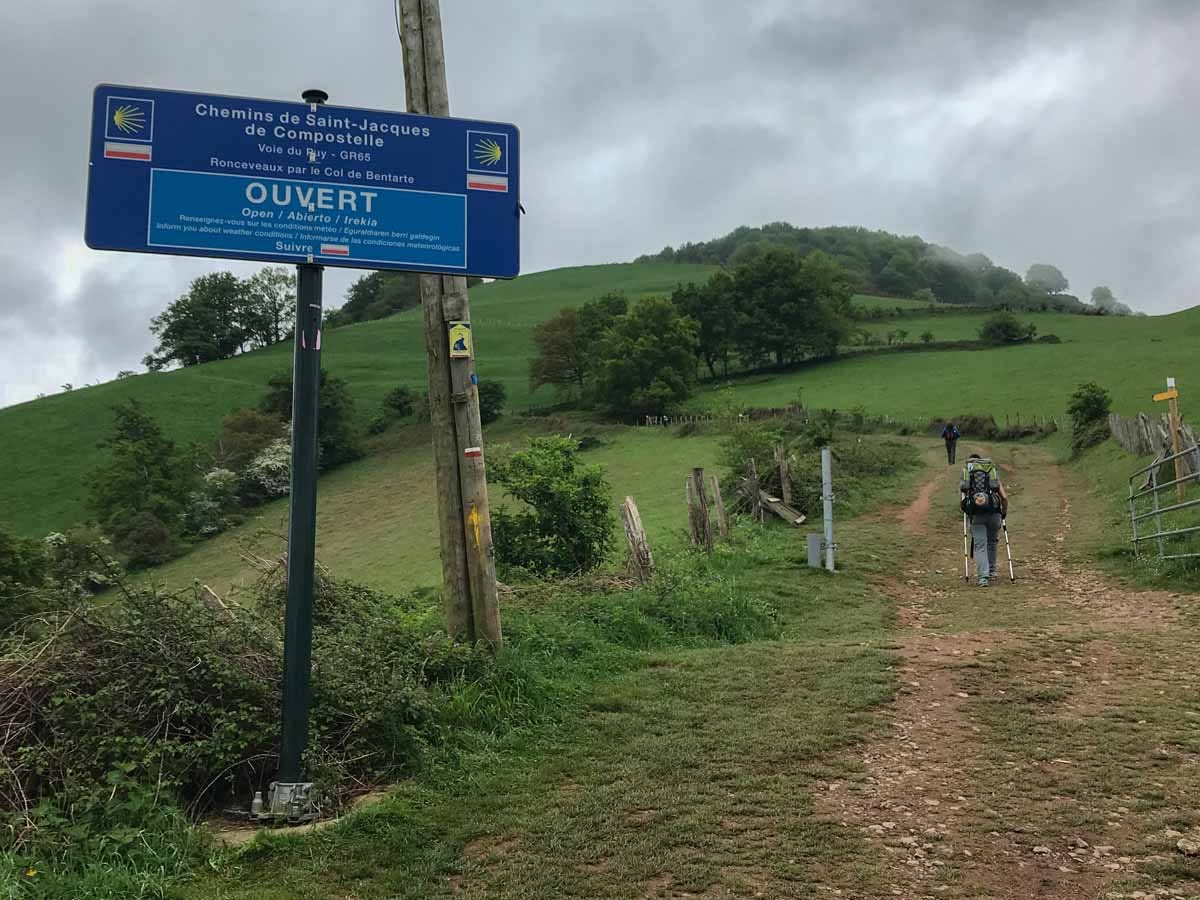
Just before we left for Mexico a few weeks ago, I received an interesting email from Lauren Kessler, a pal from my Portland days. She said she was recently “in the neighborhood,” walking the Camino de Santiago, and also wondered if I’d like to read a galley of her new memoir, Everything Changes Everything: Love, Loss, and A Really Long Walk, since it unfolds not far from my adopted home. (Recall, please, that Collioure is located where the Pyrenees meet the Mediterranean, ten miles(ish) from the border with Spain, as the crow flies.)
There are several Camino routes, but the Camino Francés — the classic route, and the one Lauren hiked — begins in Saint-Jean-Pied-de-Port on the French side of the Pyrenees and runs roughly 500 miles across northern Spain. It’s the pilgrimage people mean when they say the Camino.
I began reading Everything Changes Everything in a hotel room in Paris. I kept going on the long flight to Portland. I finished it in Baja, beneath the swaying palms. It’s one of those books that stops the clock. How immeasurably grateful I am for books like these, and for this one in particular.
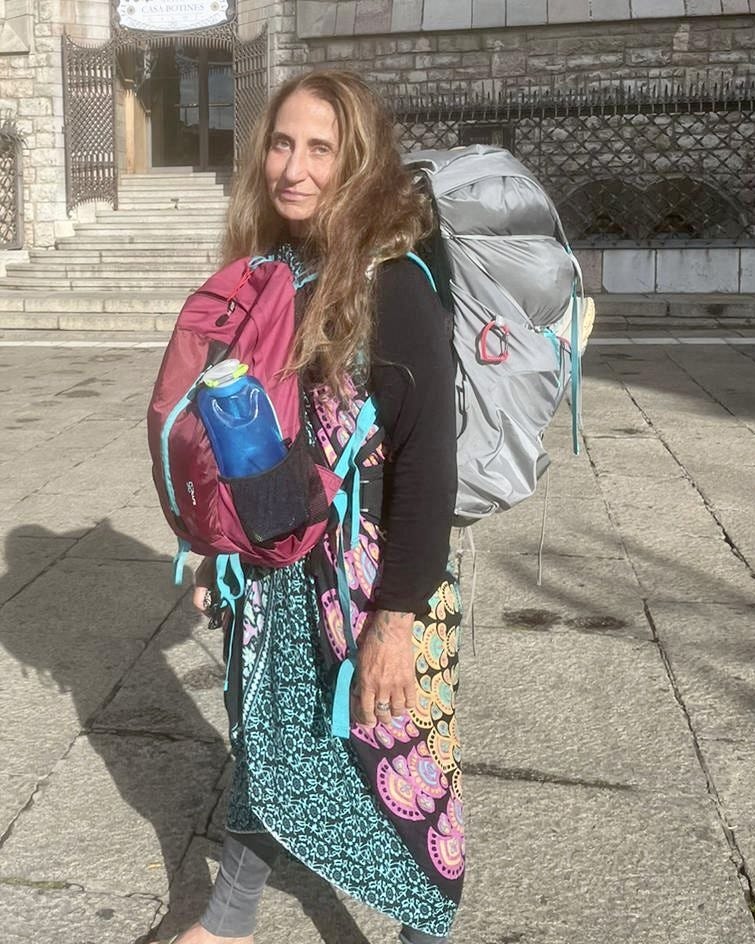
Everything Changes Everything — how great is that title? — is about no less than how we choose to die and how we choose to live. After her husband’s assisted death following cancer, and soon after the death of her daughter, Lauren decides to walk the Camino, intent on creating a deliberate separation of the life that Was from the life that Is. It reminded me a lot of the modern classic Wild. Her physical journey is shot through with memory, grief, and fury, but also, incomparable beauty, and the strange fellowship of other pilgrims limping toward something they can’t quite name
.
When I finished Lauren’s book, I had SO MANY QUESTIONS. About fate and blame and hope and whether and how we’re supposed to save, or try to save, the people we love the most. About writing toward the worst things, while paradoxically learning to respect and savor the best things. About how a story like this is built, and summoning the literary chops it takes to build it.
At the same time — while I was flying from Paris to Portland to Baja with Lauren’s book open in my lap — the Washington Post shuttered Book World, rendering Ron Charles, one of the last truly thoughtful daily critics, without a weekly paycheck. Apparently, in the current economy, even a modest amount of serious book coverage is too much.
Still, no one has taken away our capacity to read carefully. No one has outlawed conversation. We are, at least for now, perfectly free to bang on about the books we love and trust that other readers will find them.
I emailed Lauren a few questions from seat 23F, and here are her responses:
KK: The nature of the two deaths you describe raise some big questions about choice. How did you navigate writing about agency, blame, and acceptance without collapsing into judgment?
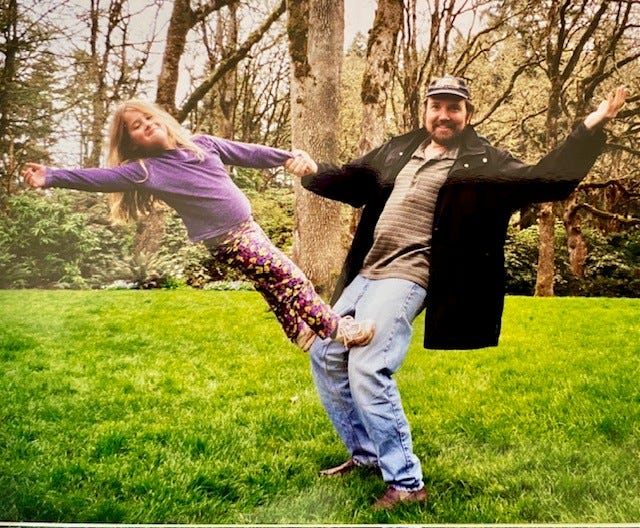
LK: I would like to own the “without” in your question, but I cannot. There is still a part of me that takes blame for Lizzie’s death, a mother who failed to protect her child. There is an even bigger part of me that blames the man who was at the center of Lizzie’s collapsing life. Even with what I know about addiction, about what we did, what we tried, how we cared; even with what I know about the troubled psyche of the man I call FA in the book, I struggle with acceptance. I collapse into judgement. I live with that tension. I don’t think acceptance is a place you arrive so much as something you circle, again and again. For me, it lives alongside blame, not instead of it
.
KK: What drew you to consider the Camino? There are some great long hikes closer to your home in the Pacific Northwest.
LK: After being clobbered (pummeled, pounded, gob smacked -- choose a horrific verb) by challenges I did not choose, I thought that a way to make sense of the things that had happened in my life, and a way to move forward, was for me to take charge, for me to CHOOSE a challenge. A big one. I needed to, I guess, prove myself to myself. I am a lover of all things outdoors. I find both power and solace in nature, so a long hike, a very long hike, appealed to me. I did not feel safe, a woman alone, hiking the backwoods of my own country. I went to Spain, as much for safety as for adventure.
KK: The book alternates between the physical journey and layered flashbacks. How did you think about pacing—what to reveal when—so that the emotional tension keeps accumulating rather than dispersing?
LK: Structure and pacing are so important to any story. I had three to tell, and I was stumped for a long time about how to approach this. I knew the Camino had to be told forward, the engine of the narrative. The other two stories I sweated over. Finally, I realized that Tom’s death was so powerful and provided such an insight into the kind of man he was, that his story had to begin there—and so would be told backward. For Lizzie, it was really my struggle to understand the journey from happy, privileged childhood to OD-ing on a stranger’s couch. That had to, it needed to, unfold forward. In between these two tales, I felt the reader (and the writer!) needed resting places, mild adventures, some humor.
KK: The Camino’s landscape and villages feel almost like silent companions in the book. What did the landscape allow you to feel—or release—that conversation and language could not?
LK: Thank you for such a big and good question. Silence, I think, is the key word here. Walking all those days, through valleys and forests, farmlands and ancient villages, often alone, more silent than not, the “world” disappeared. The world of my once-five, now-three family, the relentlessly busy, 24/7 connected world of the culture I was a part of. And oh, the expansiveness of that. The deep breath of that. The peace of that. I do not have the words. Because it is all about silence. But it was not just the eucalyptus forests and the vineyards and the sunflower fields, not just the spare, almost monochromatic beauty of the Meseta. It was also the cultural and spiritual history of the land I walked through and the community of kindness created by those who walked.
KK: You write that one of the things you loved about your hike is that you had no past. You didn’t have to explain yourself to anyone. And yet, you wrote this searing, magnificent account of your loss. Tell me about the decision to write the memoir.
LK: As I hiked the 35 days on the Camino Frances, I was alternately in the moment (for better and worse, but mostly better) and processing the past, trying to learn from it. In fact, I sometimes wearied of every moment presenting itself as a “teaching moment.” But apparently, I had a lot to learn.
I learned about the weight we carry, what we can unload and what we maybe can carry with grace. I learned that illness has its own narrative. I learned that you cannot love a person out of addiction. I learned that joy and pain can coexist. Or, as Mary Oliver wrote, “We shake with joy/ We shake with grief./What a time they have, these two/housed as they are in the same body.”
I needed to tell these intertwined stories—the Camino, my husband’s illness and death, my daughter’s addiction and death—because the lessons were so powerful and, given what we have all been through, so applicable.
KK: Your portraits of both Tom and Lizzie are vivid and unsparing, but never sentimental. As a journalist, how did your reporting instincts shape the way you wrote about the people you loved most?
LK: That is it, exactly, my reporting instincts guided me. I held these two people in my heart. But I also saw them as characters in this story, in their own lives, in the life we shared as a family. My love for them is profound. But they are actors in this play, characters in the narrative. I had to create that distance in order to write, as you say (and thank you for this) vividly, unsparingly but never sentimentally. I wanted them to be understood as people. This book is not a pity party. I am not a wallow-er.
KK: You made the beautiful and heartbreaking observation that grief isn’t a thing you “get through,” but a new internal organ; how is that organ doing now?
LK: It has taken up permanent residence, this new organ. It is just there.
You don’t “feel” the presence of your stomach unless you are very hungry, or you’ve eaten something that disagrees with you. This grief organ is like that. When I am “hungry” for Tom’s humor or his touch, when I am hungry for those moments Lizzie and I had, I feel this new organ acutely. When there is a “trigger,” a song, a place, a smell, the organ reacts. It makes its presence known. It aches.
KK: Are there any juicy bits from your walk that wound up on the cutting room floor?
LK: I’d love to tell you that I slept with the gorgeous Frenchman, or that I punched Kiki in the jaw after her encyclopedic knowledge pissed me off one too many times. But, alas: No. I hiked. I sweat. I slept badly. I drank too many cafe con leches and just the right amount of wine. Eso es todo.
KK: Tell me what it is you love so much about Spain.
LK: I am forced to begin: “How do I love thee/ Let me count the ways.”
I love the language: melodic, rhythmic, expressive, each syllable given equal weight. I love the warmth of social interactions that are at the heart of the culture, where double-kiss greetings and affectionate gestures are the norm. I love the countryside that is forest and mountain and plain, tiny ancient villages, sophisticated cities and everything in between. I love Gaudi and Goya and Picasso. I love Lorca and Cervantes. I love the oranges and the cafe con leche and, most of all, the pimientos de Padron. Is that enough?
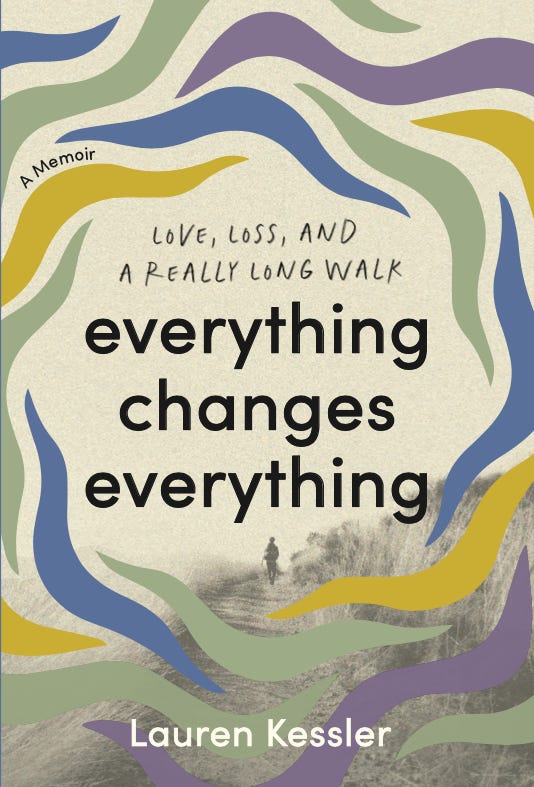
Everything Changes Everything lands February 24. Pre-orders are the currency of hope in publishing, so if the book calls out to you, consider securing your copy now! Sold wherever books are still treated as objects of meaning rather than decor.
Can't wait to read this
Looking forward to reading Lauren's book!